Banquette Seating: A Roundup of Our Favourites
A banquette is one of the most considered ways to seat a room. It makes the most of a corner or a window, seats more people than a set of chairs, and turns a dining space into somewhere people actually want to stay. Done well, it looks as though it had always been part of the house.
So, what makes a good one? Here is a roundup of some of our favourites, and what makes each one work.
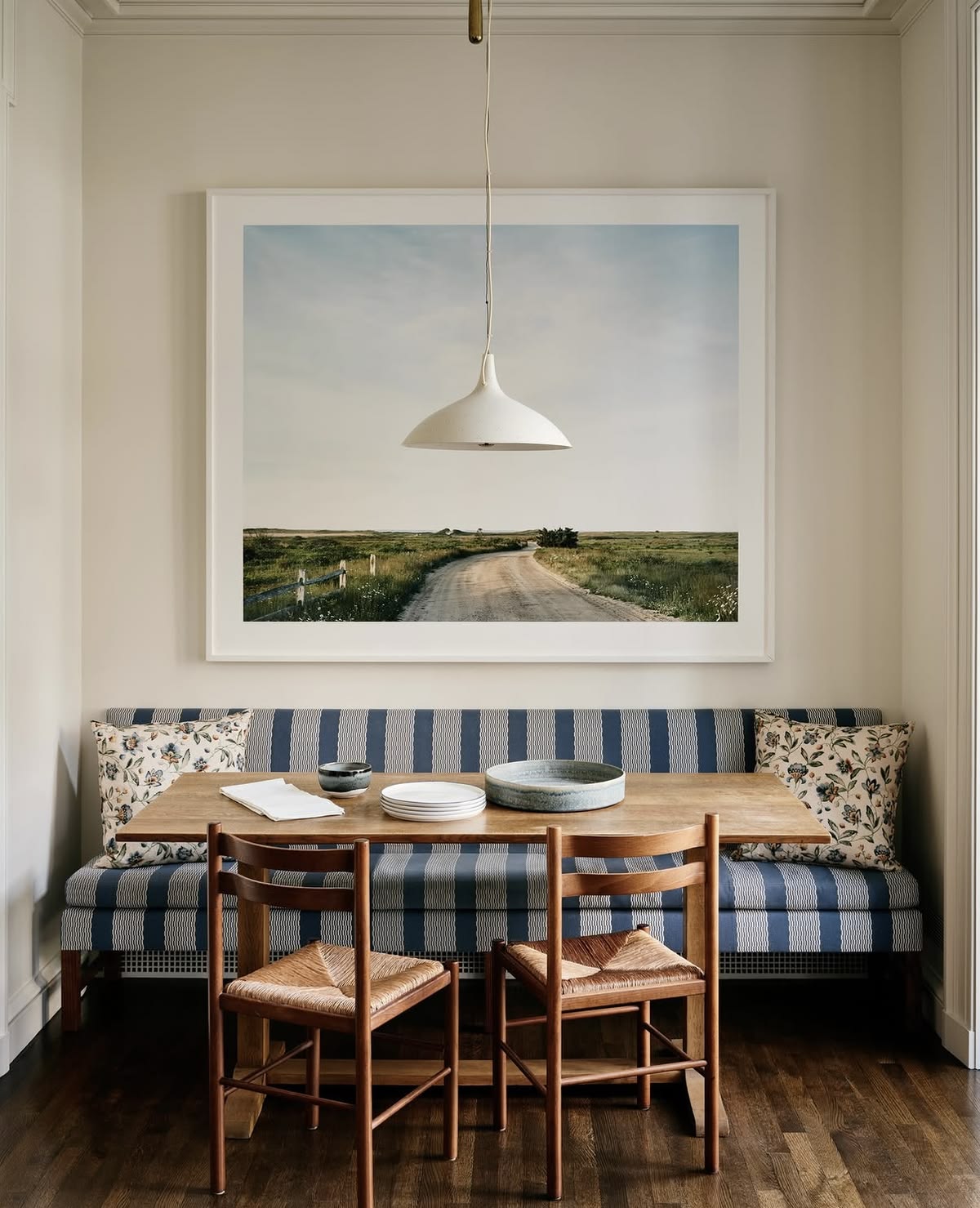
A free-standing banquette custom-made to fit the space in a bold blue and white stripe makes the most of this dining alcove, with a pendant hung low over the table and simple table and rush-seat chairs. Image via Pinterest
The Kitchen Nook
A banquette is at its best in a kitchen, where it turns a spare corner into the place the household gathers. Tucked into the corner, it frees up floor space and keeps the table out of the main thoroughfare. A fixed seat also means one less chair to pull in and out, and a comfortable place to sit while dinner is being made.
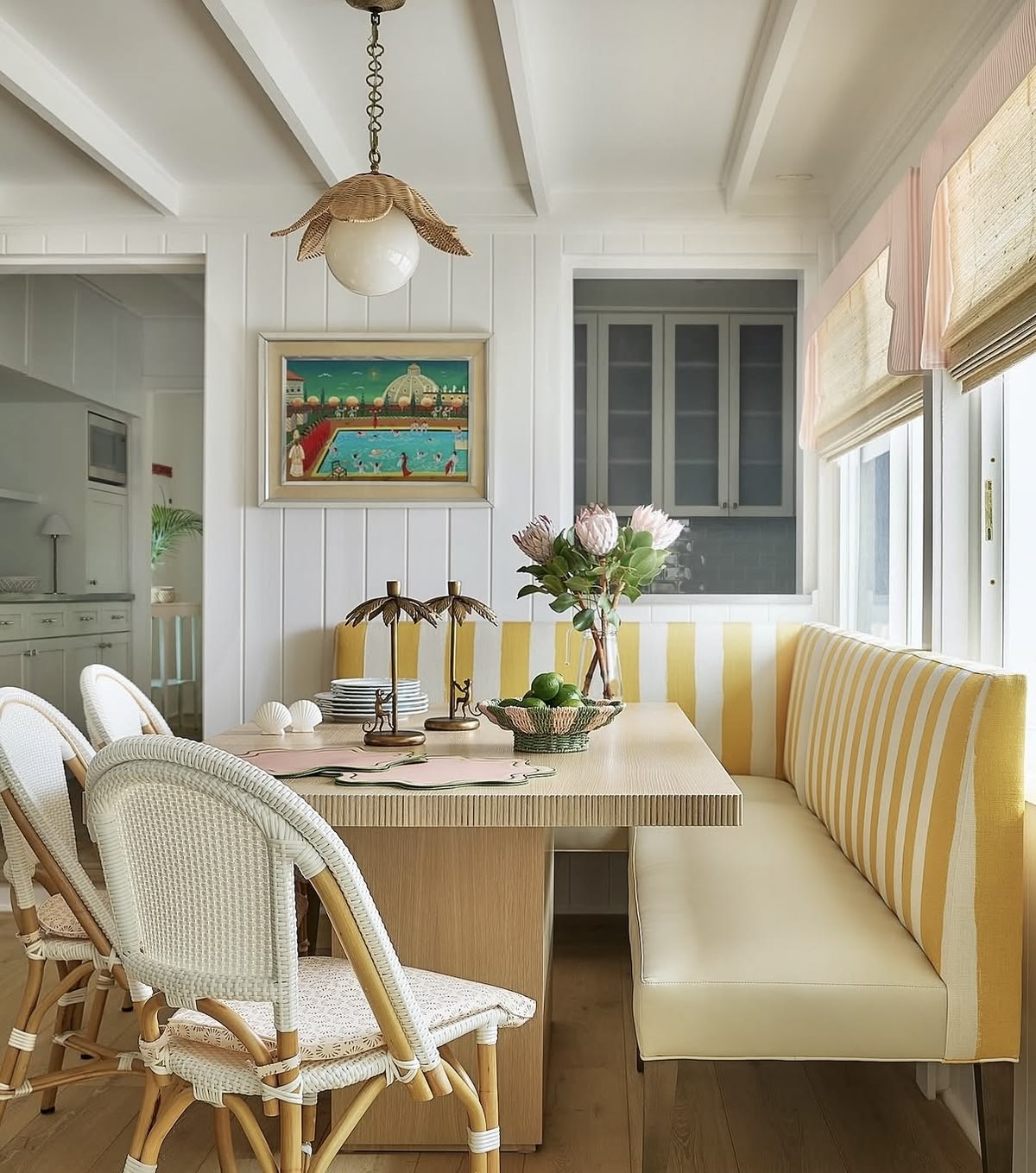
A corner banquette in pretty yellow stripe gives this kitchen a lovely, relaxed place to eat. Image via Pinterest
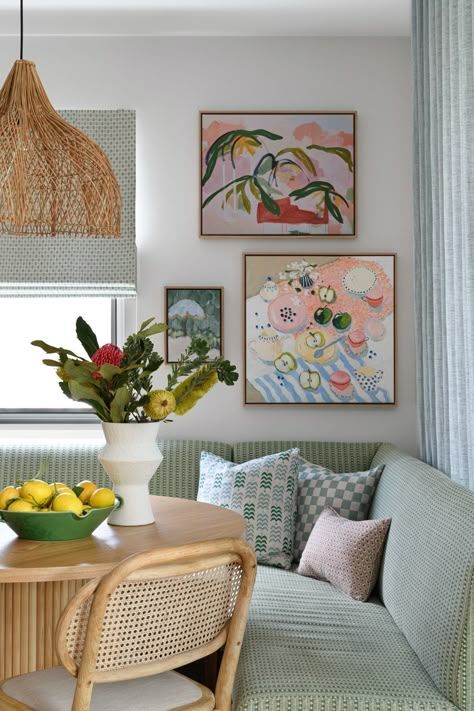
A fluted pedestal table, a woven pendant and a colourful artwork grouping create the perfect corner. Image via Pinterest
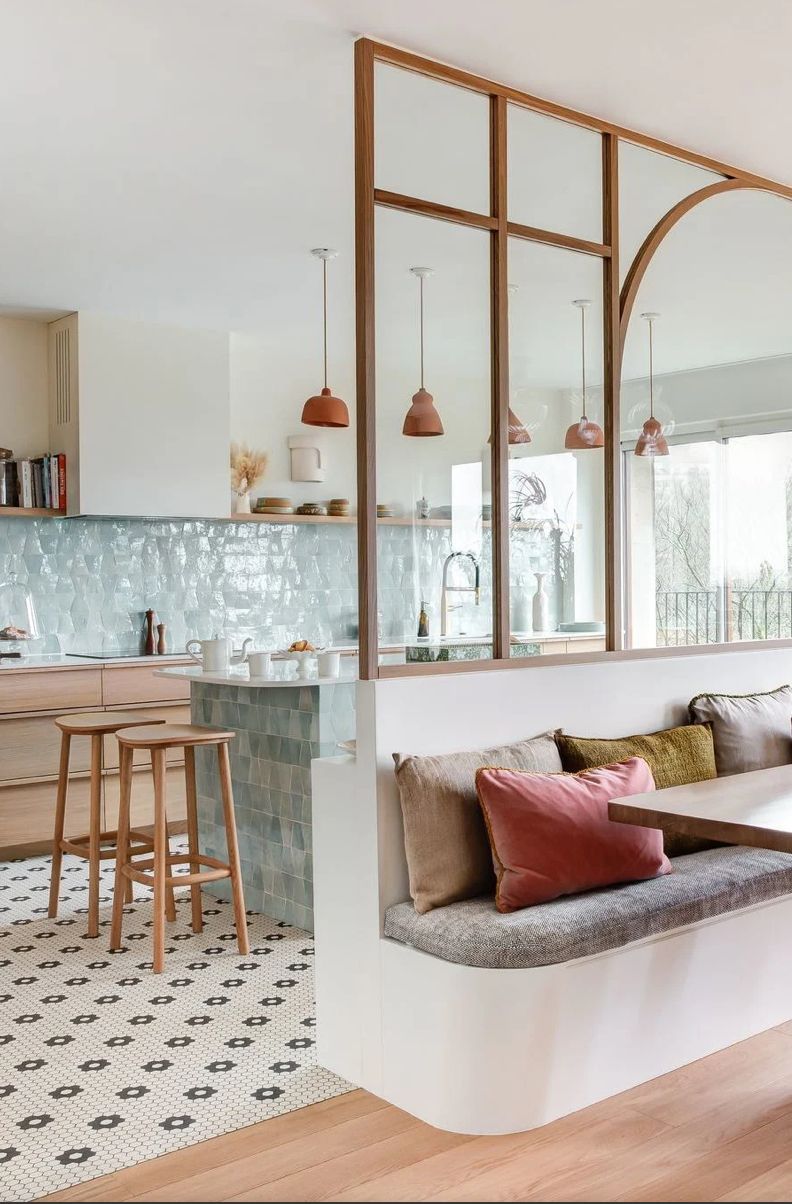
A curved, built-in banquette sits beneath a timber and glass wall, a clever way to divide a kitchen and dining area. Image via Pinterest
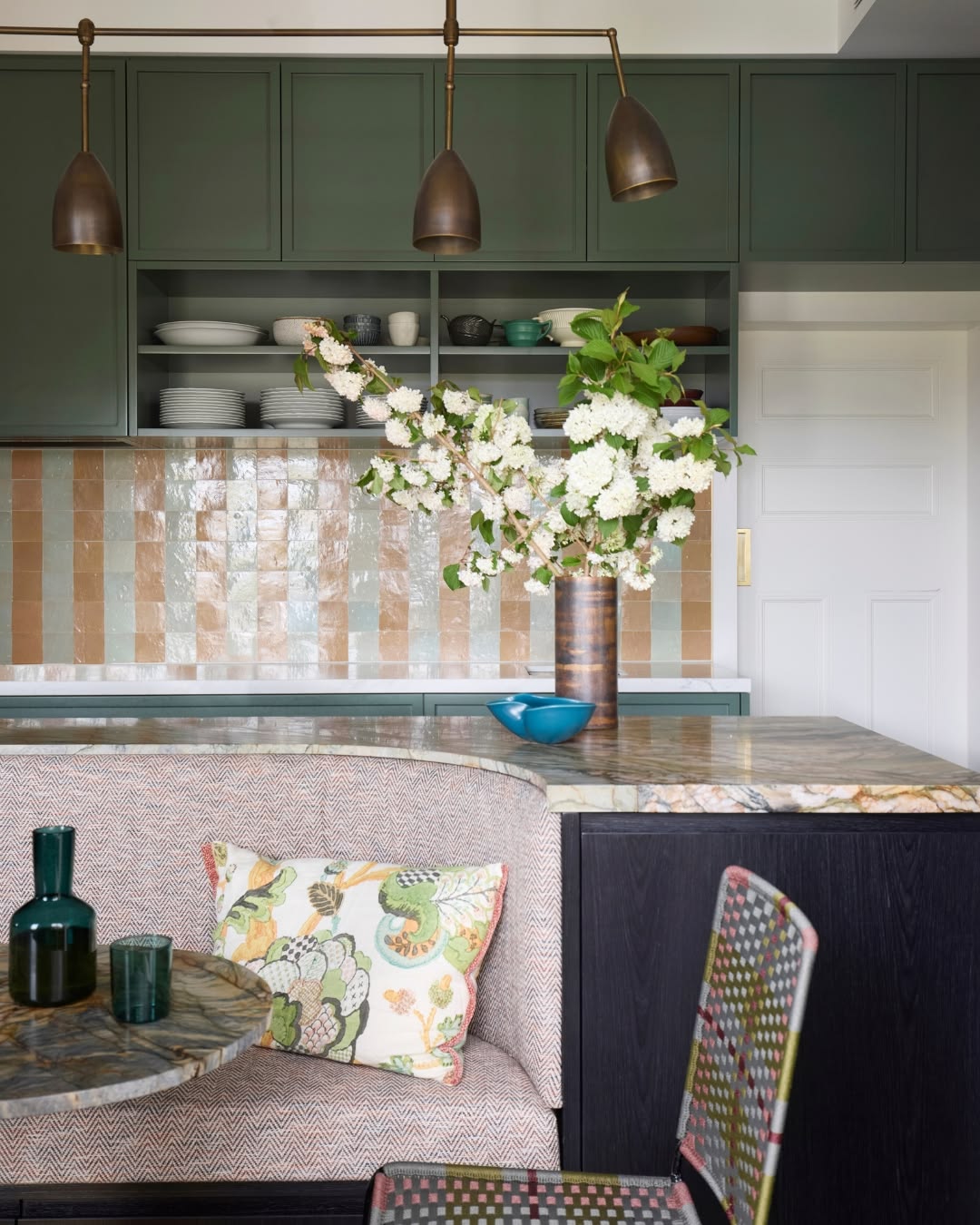
A curved banquette in soft herringbone, tucked against the island makes a sociable place to perch in the kitchen. Image via No Chintz Interiors
The Dining Room
In a dining room, a banquette brings softness to what is often the most formal room in the house. A long upholstered seat along one wall with chairs opposite gives a relaxed, café-like feel and seats a crowd comfortably. Choose a table on a pedestal or trestle base so people can slide in without catching a leg.
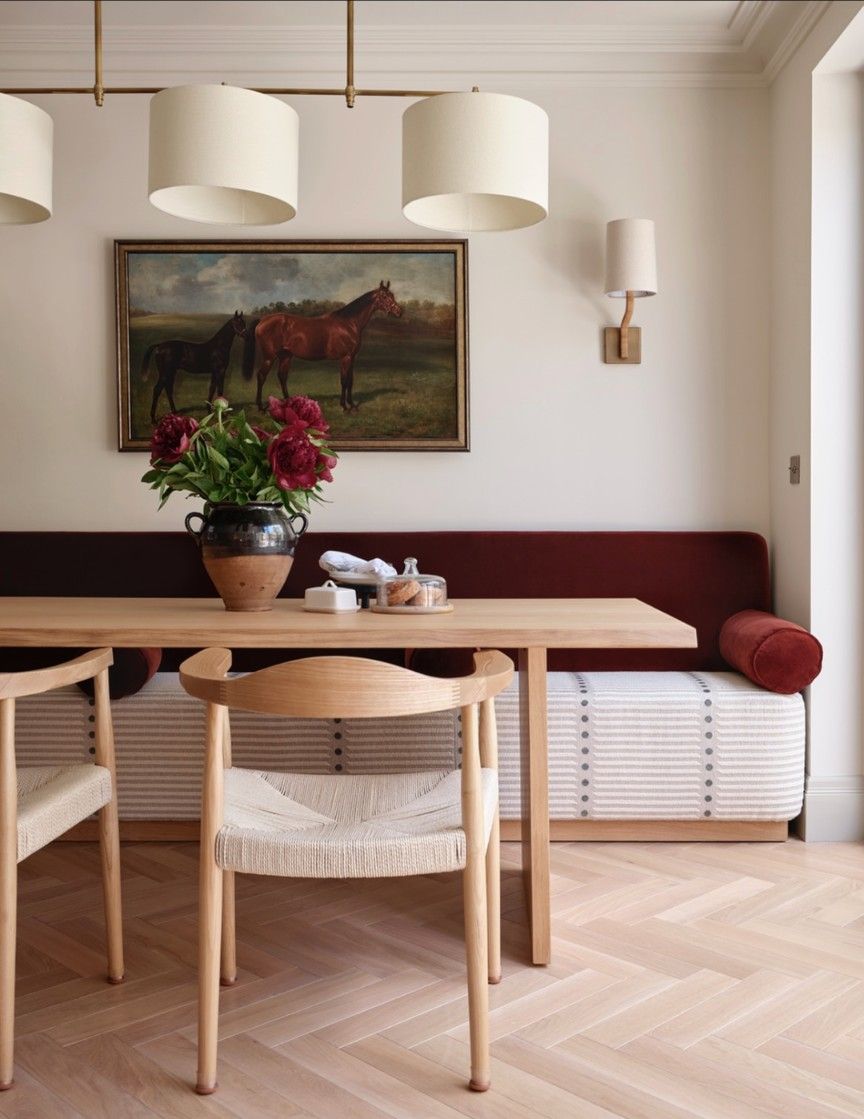
A long banquette with chairs opposite keeps this dining room relaxed and seats a crowd without dominating the space. Image via Pinterest
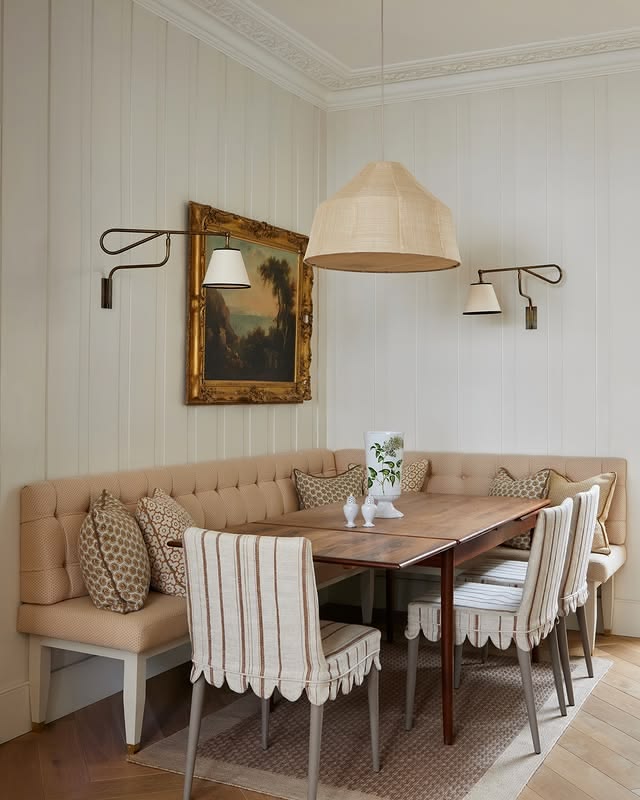
A tufted, L-shaped banquette against panelled walls and statement dining chairs gives this dining room a beautiful layered, lived-in warmth. Image via Eadie and Crole Interior Design
The Window Bay
A bay or window seat is a natural home for a banquette. Built to follow the shape of the window, it makes use of a space that is otherwise hard to furnish, and the view does the rest. This is also where storage under the seat earns its keep.
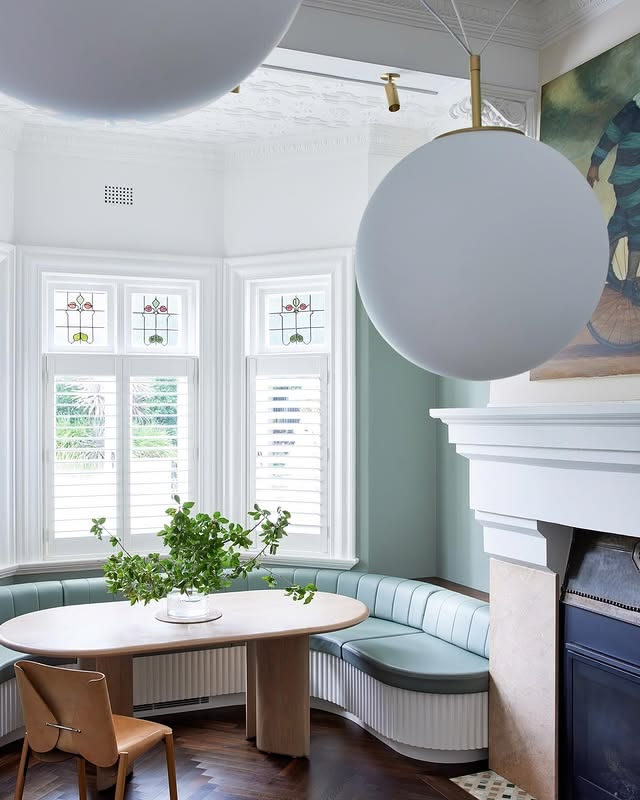
A bespoke seat in a gorgeous duck egg leather follows the curve of the bay and makes the most of this light-filled window. Image via Mina Staples Interiors
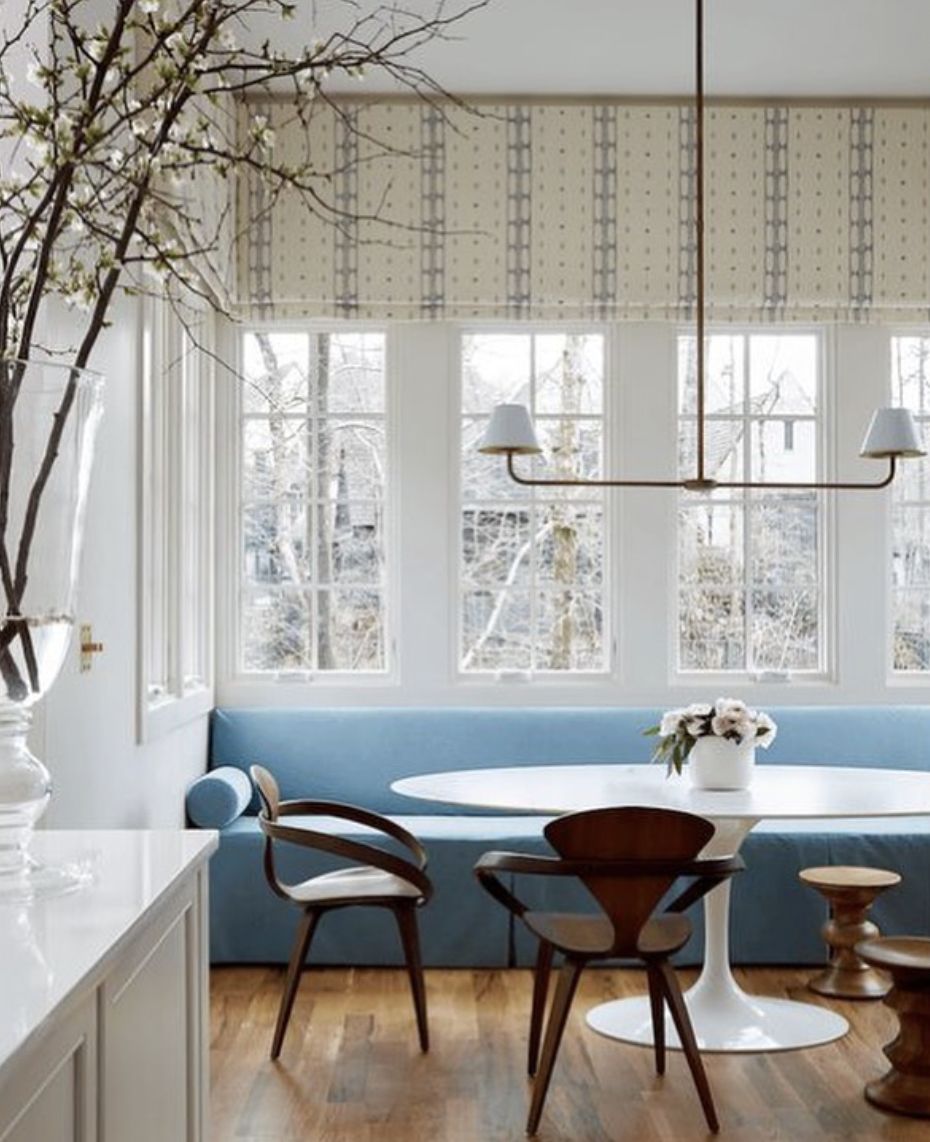
Set beneath a run of windows, a soft blue banquette keeps the view in full focus. Image via Pinterest
Living Spaces and Entries
Banquettes are not only for eating. In a family room or an entry, a built-in seat gives you somewhere to sit, read or take your shoes off, with storage beneath. It is a quietly practical way to add seating to a room without adding furniture.
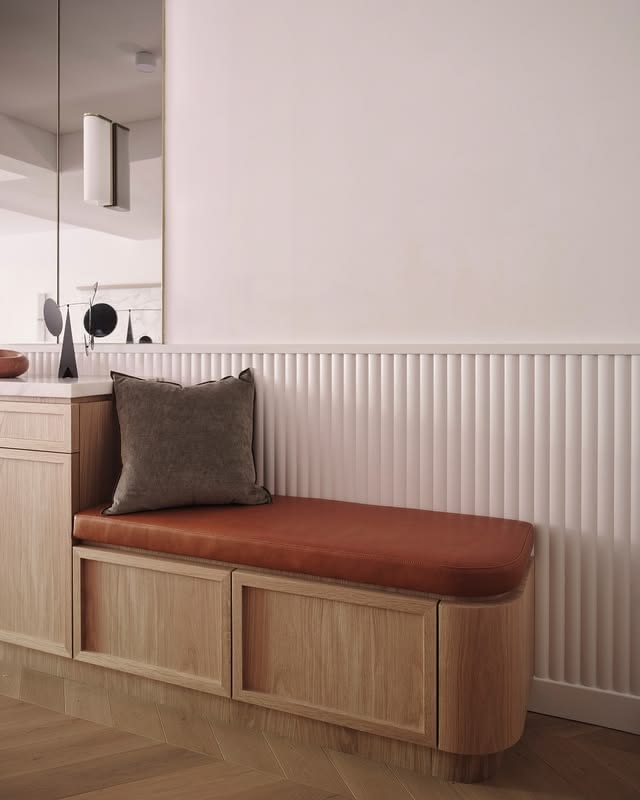
A built-in timber bench with a tan leather cushion and storage beneath adds seating to this kitchen area and makes it a considered part of the joinery. Image via Georgina Wilson & Associates.
What Makes a Good Banquette
The best ones share a few things. Comfort comes first: a seat height of around 45cm, a seat depth of 45 to 50cm and a gentle rake to the back make the difference between a seat people perch on and one they stay at. Fabric matters just as much. Choose a hard-wearing, wipeable fabric or leather, particularly in a kitchen, and consider piping or a contrast trim to give the banquette some definition.
Finish with cushions to soften the back, and a pendant hung low over the table to bring the whole nook together. A banquette is built to fit its room, so it is worth planning early. Custom upholstery often carries lead times of eight to twelve weeks.
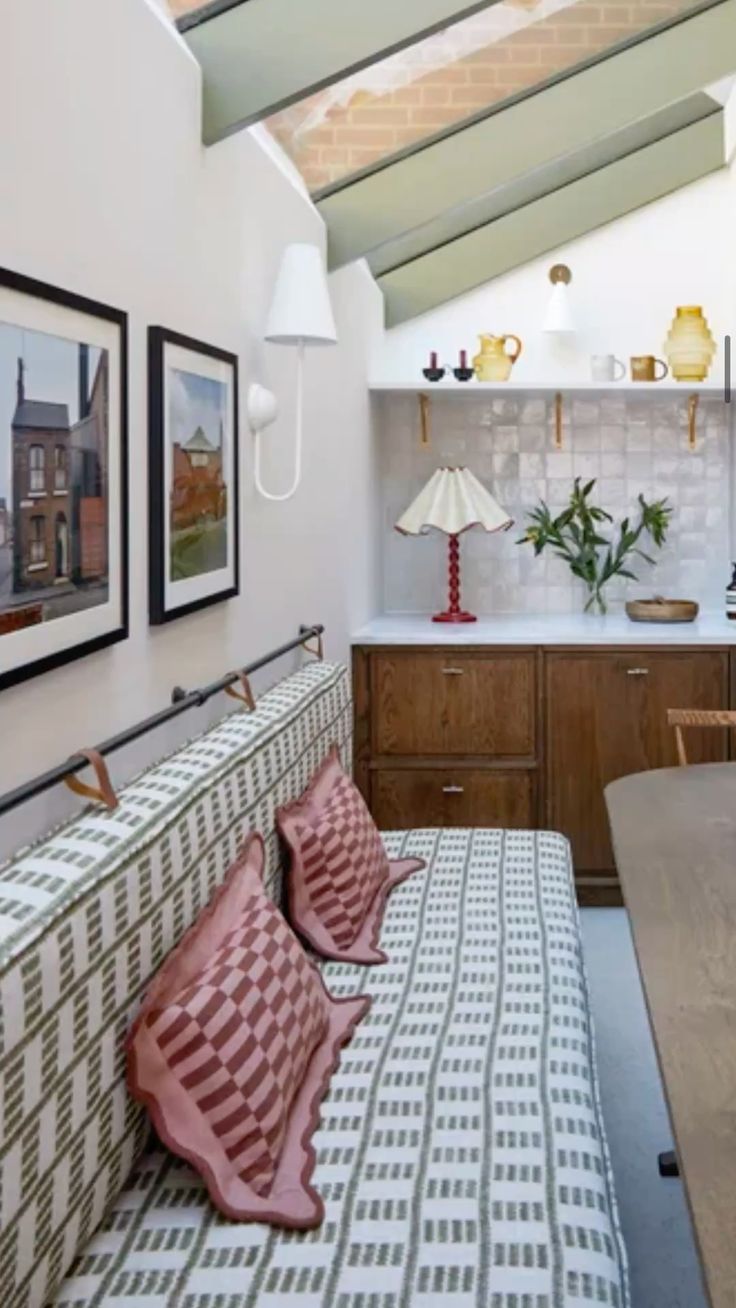
A check patterned seat and back with leather trim and a bright scatter cushion to finish the space. Image via Pinterest.
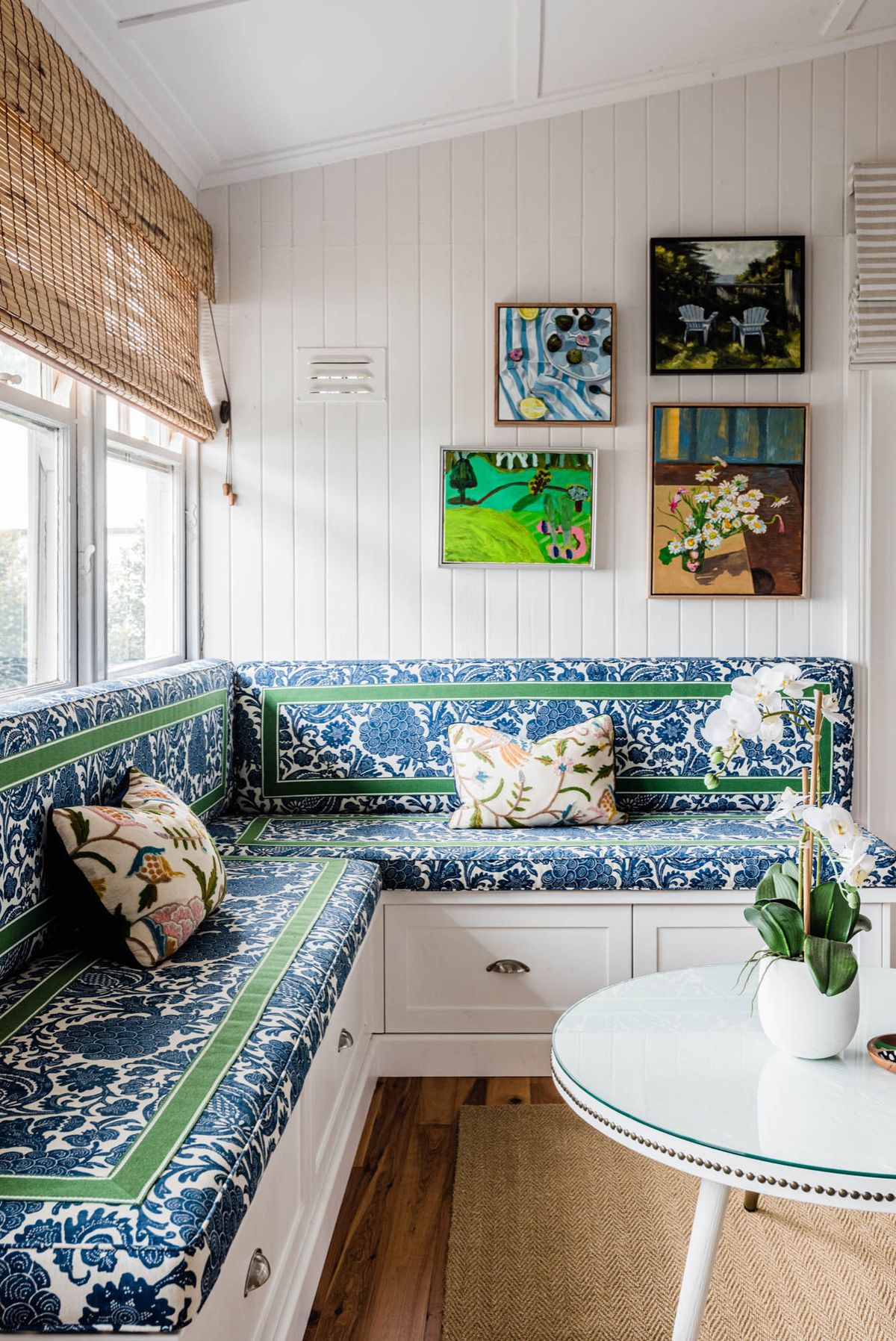
A green trim gives this blue print its definition, with drawers below for storage and a lovely gallery wall above. Image via Porchlight Interiors
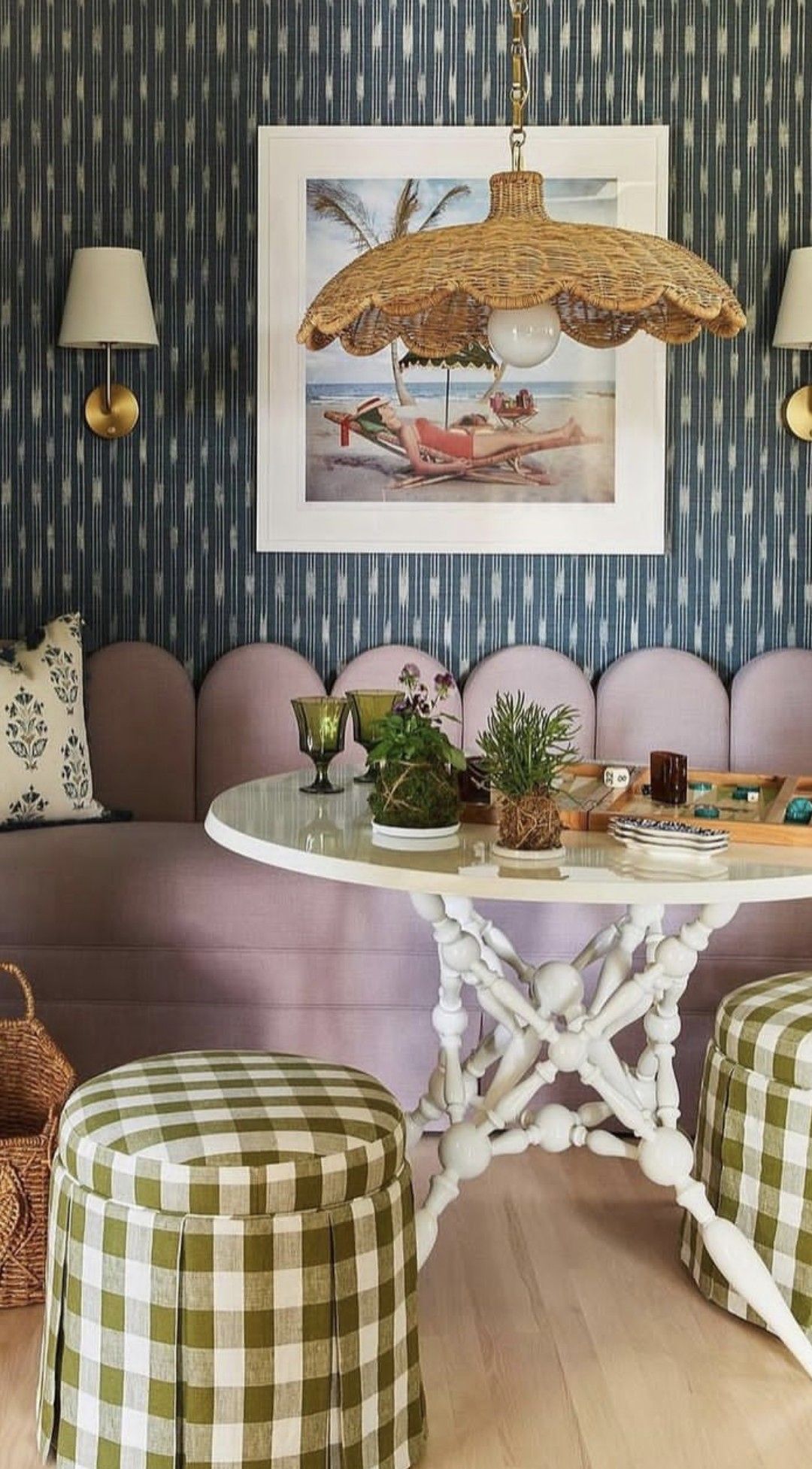
A cute scalloped back and a woven pendant add shape and softness above this table nook. Image via Pinterest
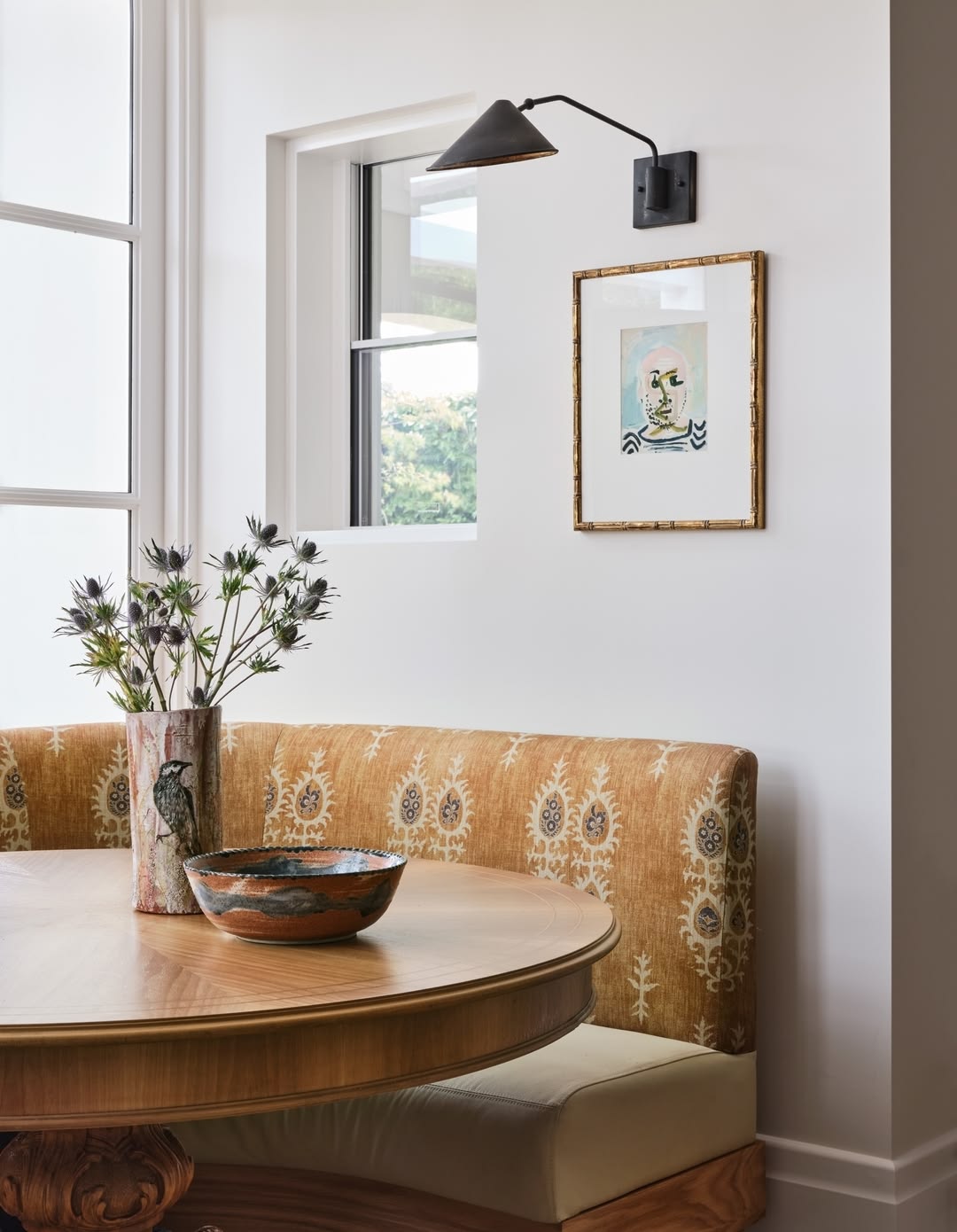
A curved back in a great Lewis & Wood fabric provides enough interest in this corner with a simple artwork lit by a wall light. Image via Pinterest
Designed to Fit
We take care of every aspect of your banquette so it’s planned as part of the whole room from specifying the finishes, the joinery, fabric selections, ordering and the final styling of the space.
Book a Consultation