Where Most Bedrooms Go Wrong
Bedrooms are deceptive. They look like the simplest room in the house to get right: four walls, a bed, somewhere to put your clothes, and yet they're often the room clients ask for our help with after the living room and kitchen are done. The truth is a bedroom carries just as much design thinking as any other space. It just does so a little differently.
After years of walking into bedrooms, these are the mistakes we see on repeat. None of them are particularly costly to fix, they just require a different approach. Usually more restraint, and knowing where to spend well.
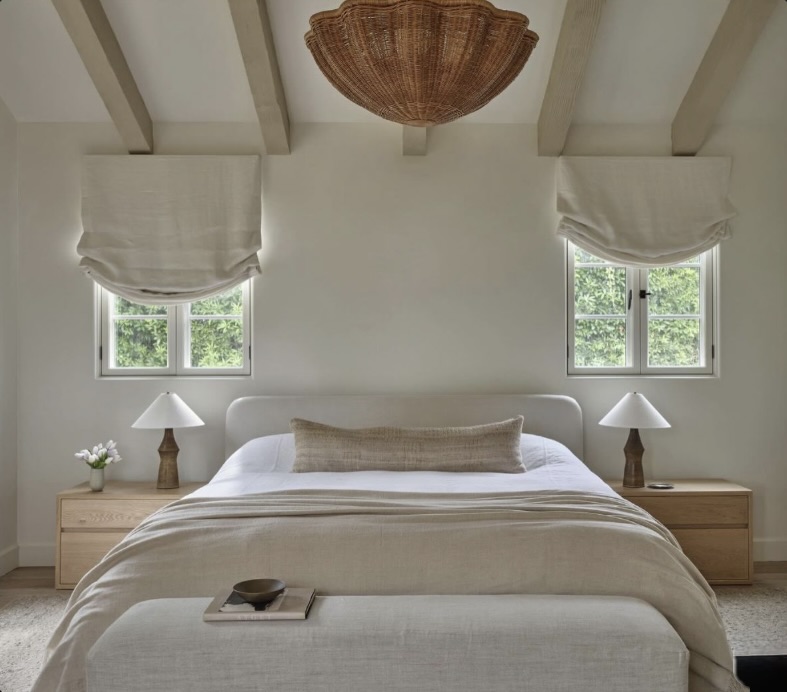
A beautifully simple, tone on tone bedroom with enough texture and a statement pendant to stop it from being beige. Image via Pinterest.
The Bed Is Too Big for the Room
A generous bed feels like a luxury until it consumes the room. If you can't comfortably walk around three sides of the bed, it's too big for the space. We generally recommend at least 700-900mm of clearance on the sides and at the foot of the bed if space allows. This makes the room feel more comfortable and visually balanced.
Bulky bed frames make spaces feel tight. If you have a compact space consider a more streamlined ensemble with a low profile headboard to create a lighter, more spacious feel.
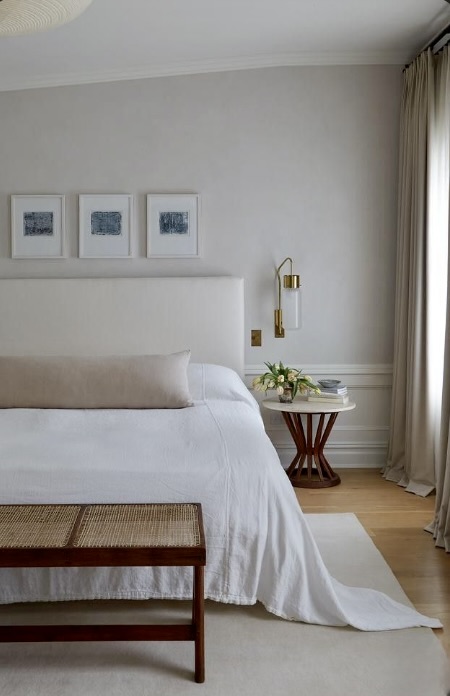
Generous clearance on either side of the bed keeps the room feeling balanced rather than crowded. Image via Pinterest.
The Walls Stop at Eye Level
Most bedrooms are decorated from the waist down: bed, side tables, a rug if you're lucky, and nothing above shoulder height. That leaves all the vertical space in the room doing nothing.
A tall shelf, a well-placed wall sconce, a single oversized piece of art, even a tall plant in the corner, will lead the eye up and make the ceiling feel higher than it is.
These subtle adjustments can dramatically improve how spacious and balanced a room feels.
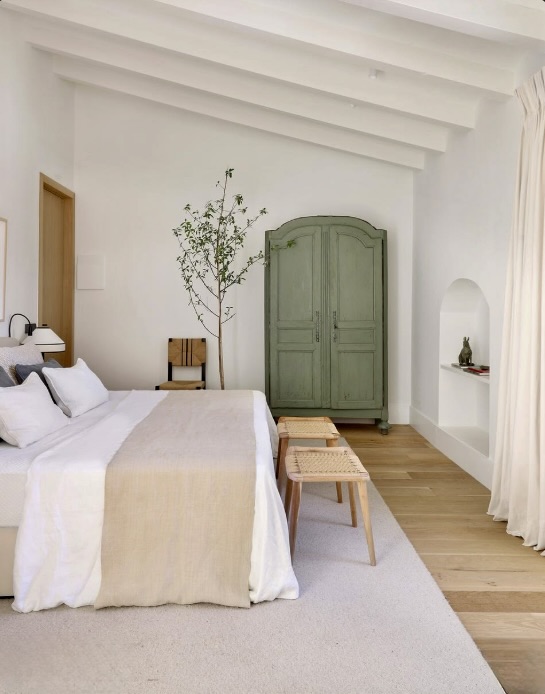
A statement piece with height draws the eye up and makes the ceiling feel taller. Image via Pinterest.
Lighting Comes From One Source
A single ceiling light is not a lighting plan, it's a compromise! Overhead lighting on its own is flat and unflattering, and if you're sharing the bed with someone on a different schedule, it's impractical too.
A well-designed room layers the lighting: lamps on either side of the bed, a wall sconce if you have the wiring for it, a floor lamp in a reading corner or a beautiful sculptural pendant.
For a warm and cosy bedroom, always choose warm globes, around 2700K, rather than cool white lighting as it will make the whole room feel clinical and stark. The difference at night is immediate.
A wall sconce paired with a bedside lamp brings warmth into the room after dark. Image via Pinterest.
There Are Too Many Cushions
We understand the instinct to over-cushion and believe me we LOVE soft furnishings, but a bed piled with too many decorative cushions looks styled and is impractical for every day living. One or two well-chosen cushions will always do more than six average ones - think quality over quantity. A bedcover in a lovely texture, and a long lumbar cushion in a beautiful fabric, paired with a linen or wool throw at the foot of the bed, gives you the same sense of considered styling without needing to remove half the bed to go to sleep!
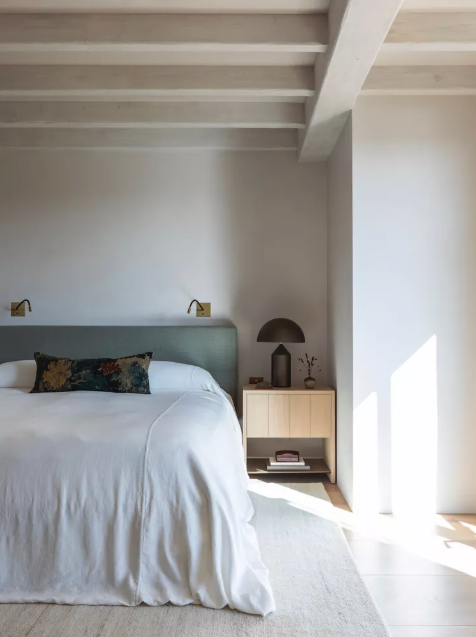
One well-chosen, statement lumber cushion along with a generous bed cover does more for this bed than too many cushions. Image via Pinterest.
Everything Matches
Whilst consistency is important in a bedroom, a suite bought as a set entirely from the one showroom lacks personality and is frankly boring.
Some of the most beautiful bedroom ideas come from contrast. Try mixing bedside tables in different materials, layering textures and contrasting rather than matching. If you want cohesion without uniformity, let one element carry through quietly for example a colour or timber carried from your bedside to the frame of your artwork helps to make a room feel cohesive without feeling too coordinated.
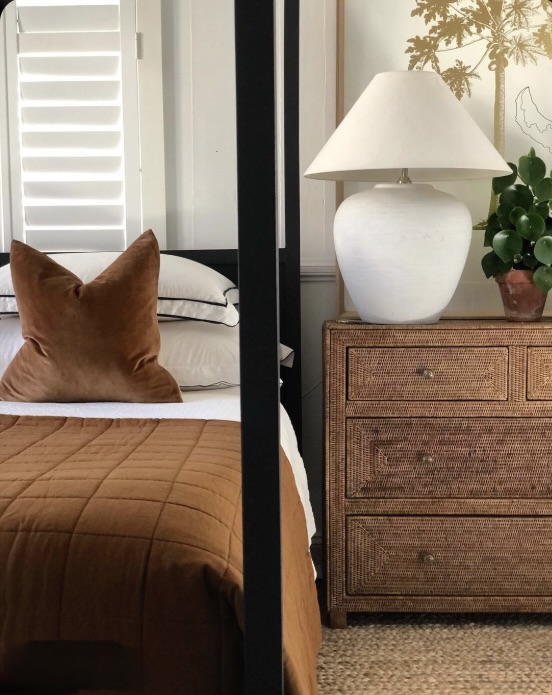
A beautifully layered and textural bedroom by Harold's Finishing Touches looks perfectly mismatched.
Storage Is Hidden Instead of Solved
Decluttering can be overwhelming which is why baskets and storage boxes often become the default solution. Whilst they can make a room feel tidier, they take up floor space and rarely solve the underlying issue.
A proper storage solution starts with a genuine edit of what you own, then think strategically about long-term storage ideas. In an awkward room, custom joinery or made-to-measure furniture will almost always work better than anything off the shelf, and it will feel like part of the room's architecture, not an add-on sitting in the corner.
The best interior design always balances practicality with beauty.
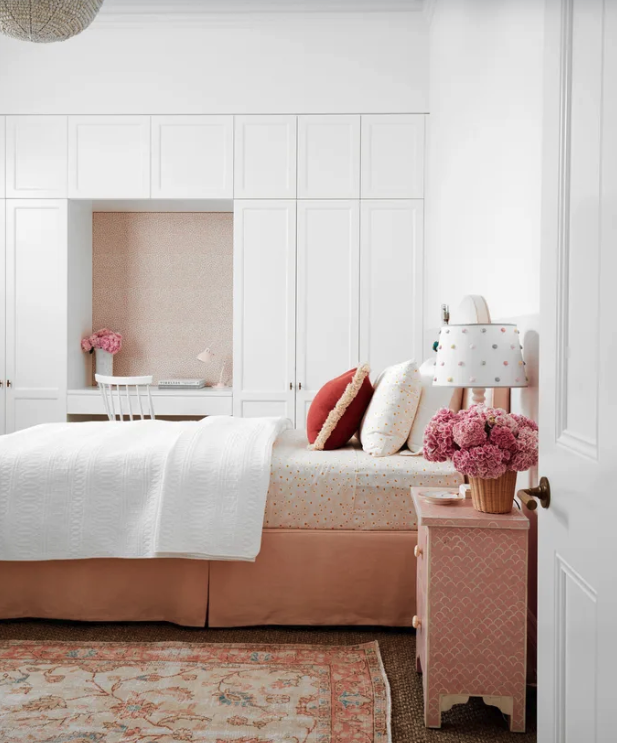
Custom joinery that reads as part of the architecture, not an addition to it. Image via Pinterest.
There's No Rug
We hear the same two objections constantly, rugs feel unnecessary in a carpeted room where most of the rug will sit under the bed, or they'll make the room look smaller. Both are actually wrong. The right rug, sized generously, anchors the bed, softens the whole space underfoot and creates a layer of texture that is sometimes missing.
As a rule of thumb and of course if space allows, I recommend a rug that is 240x300cm under a queen bed, and 300x400cm under a king. The rug should extend beyond the sides and the foot of the bed with ideally the front two-thirds of the bed sitting on top for impact.
The type of texture you use also makes a difference - wool brings warmth and softness and feel luxurious under foot, while natural fibres like sisal or jute brings texture and a more relaxed feel.
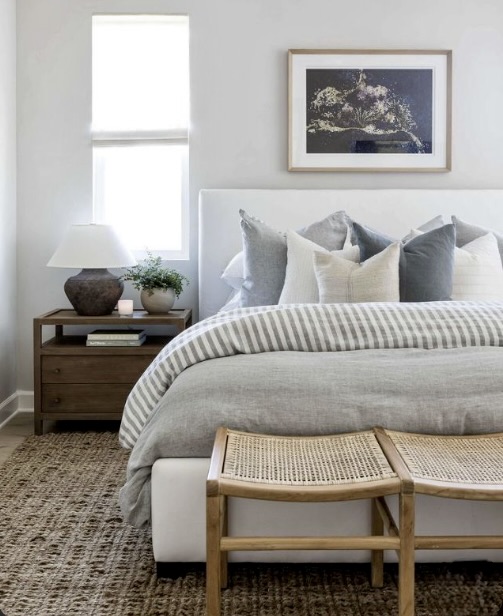
Sized generously, this rug anchors the bed and softens the whole room underfoot. Image via Pinterest.
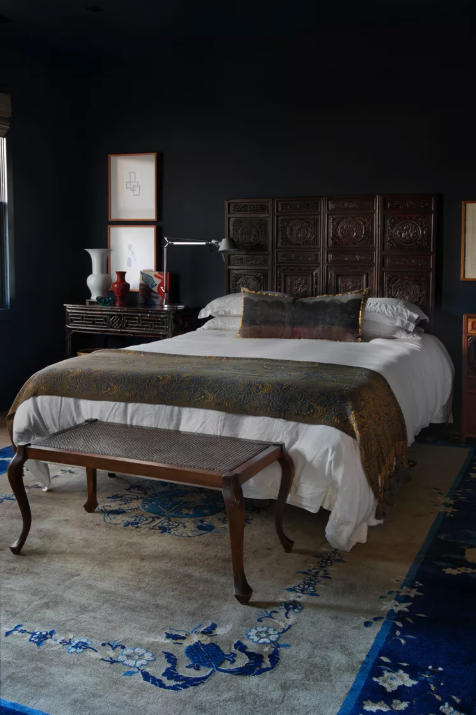
A richly patterned antique rug like this one anchors the whole room and adds a real sense of history. Image via Pinterest.
Don't Be Afraid of Colour or Wallpaper
So many bedrooms end up beige out of caution rather than intention, and the result is a room that ends up feeling flat, cold or overly neutral.
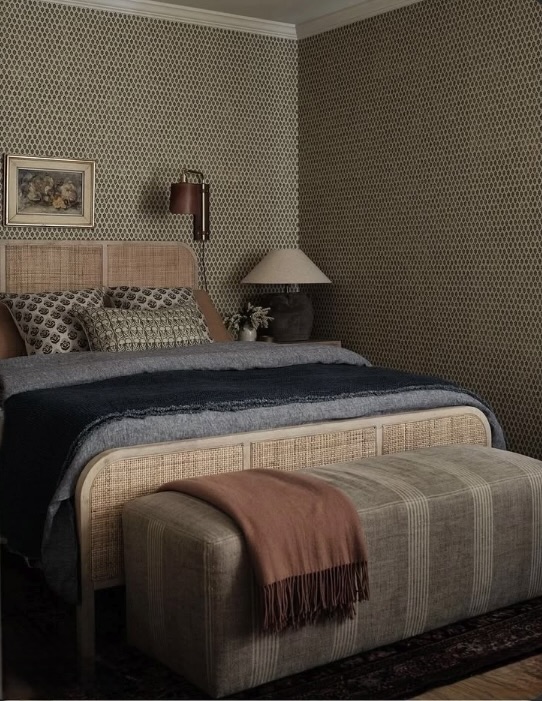
You don't necessarily need a bold colour to add depth. A muted, desaturated tone will do more for a space than you would expect. Think olive green, dusty blue, clay or a soft brown. And contrary to what most people assume, a deeper colour in a bedroom doesn't close the room in, it can make it feel larger whilst being cosy and cocooning, which is exactly what a bedroom should be. Similarly, wallpaper adds a level of dimension and has the same cocooning effect that a colour does whilst also adding an additional layer of texture.
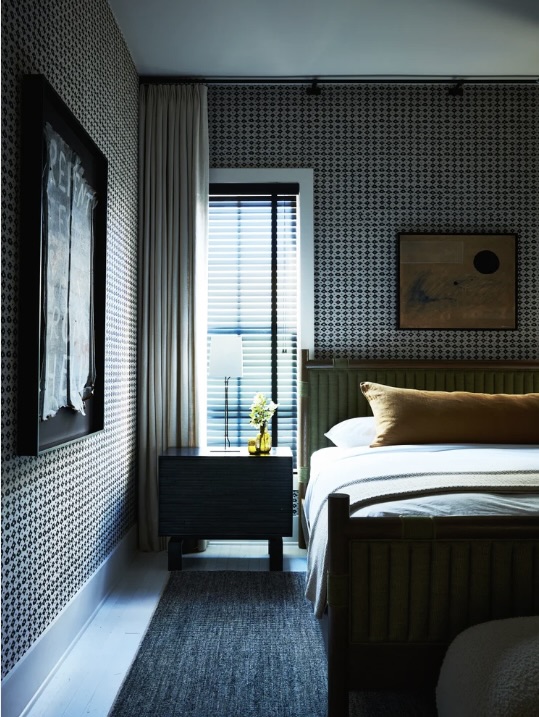
A patterned wallpaper and deeper colour palette in this room by Smith Hanes makes this room feel cocooning and cosy
A Final Note
Creating a bedroom that feels warm, functional and beautifully layered doesn't require a complete renovation. Often the smaller styling and layout decisions have the most impact.
Refining the lighting, improving your furniture layout and storage and introducing texture and colour can create a bedroom that feels far more elevated, calm and personal.
For more bedroom styling inspiration and curated home ideas follow me on Instagram.

Ready to Get Your Bedroom Right?
If your bedroom needs more than a fresh cushion cover, our Signature Styling Experience covers everything from spatial planning to final styling, so proportion, lighting and layout are all considered together.
Book a Consultation